Linear 3-Part Start Technique
A beginner plyometrics exercise for the hamstrings, done with just your bodyweight.
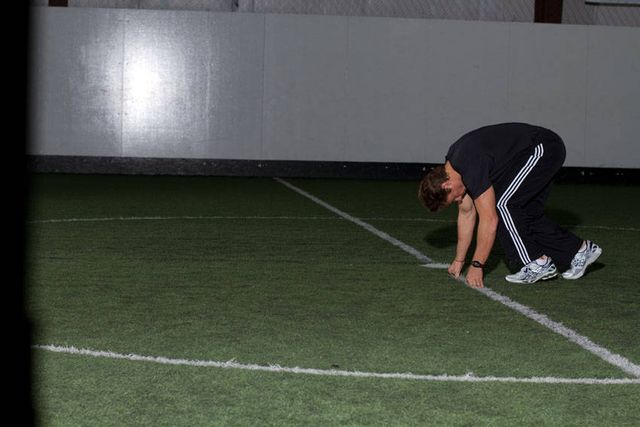
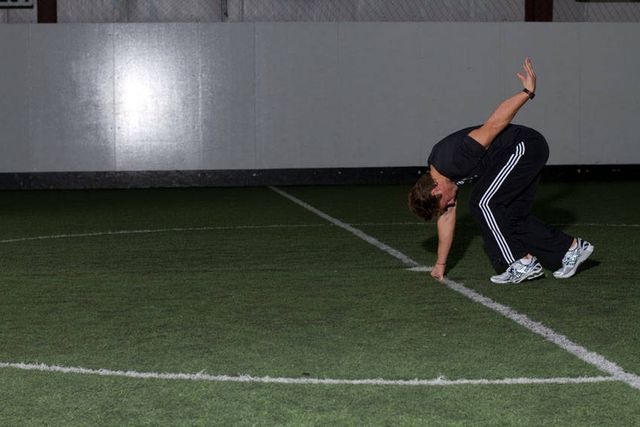
- Main muscles
- Hamstrings
- Also works
- Calves and Quads
- Equipment
- Bodyweight
- Level
- Beginner
- Type
- Compound
- Movement
- Push
How to do the Linear 3-Part Start Technique
- This drill helps you accelerate as quickly as possible into a sprint from a dead stop. It helps to use a line to start from. Begin with two feet on the line. Place your left foot with the toe next to your right ankle. Place your right foot 4-6 inches behind the left.
- Place your right hand onto the line, and thing bring your nose close to your left knee.
- Squat down as you lean foward, your head being lower than your hips and your weight loaded onto the left leg. This will be your starting position.
- Take your left hand up so that it is parallel to the ground, pointing behind you, and explode out when ready.
Sets and reps
| Conditioning | 3–5 rounds of 20–40 seconds, rest as long as the work |
|---|---|
| Power | 3–5 sets of 3–5 fast reps, full rest |
Log every set in MyoStats and it works out your estimated one-rep max and suggests the next weight or rep target, so you keep progressing without guessing.
Alternatives to the Linear 3-Part Start Technique
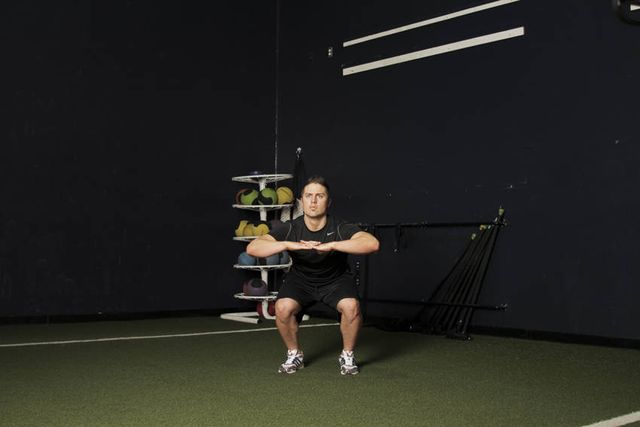 Knee Tuck JumpBodyweight · Beginner
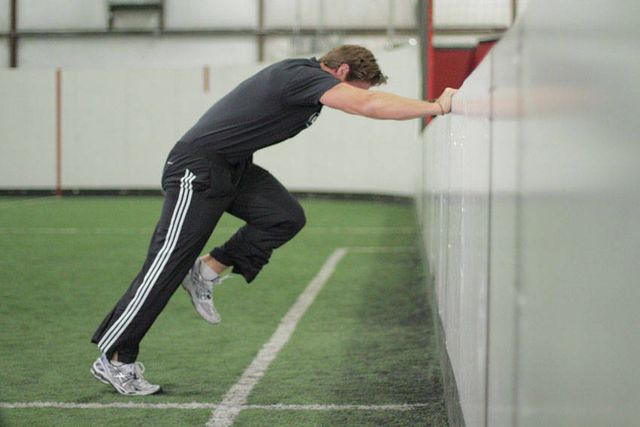 Linear Acceleration Wall DrillBodyweight · Beginner
 Moving Claw SeriesBodyweight · Beginner
 Box Jump (Multiple Response)Other equipment · Beginner
 Box SkipOther equipment · Beginner
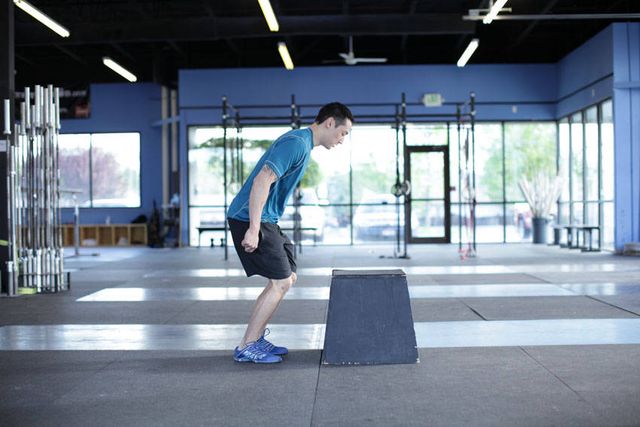 Front Box JumpOther equipment · Beginner
 Hurdle HopsOther equipment · Beginner
 Vertical SwingDumbbell · Beginner
Questions
What muscles does the Linear 3-Part Start Technique work?
Mainly the hamstrings, with the calves and quads helping.
Is the Linear 3-Part Start Technique good for beginners?
Yes. It's rated a beginner exercise: start light and learn the movement before adding weight.
What can I do instead of the Linear 3-Part Start Technique?
Good alternatives that train the hamstrings: Knee Tuck Jump, Linear Acceleration Wall Drill, Moving Claw Series or Box Jump (Multiple Response).
How many sets and reps of the Linear 3-Part Start Technique should I do?
Conditioning: 3–5 rounds of 20–40 seconds, rest as long as the work. Power: 3–5 sets of 3–5 fast reps, full rest.
Exercise steps and photos: free-exercise-db (public domain).