Knee Tuck Jump
A beginner plyometrics exercise for the hamstrings, done with just your bodyweight.
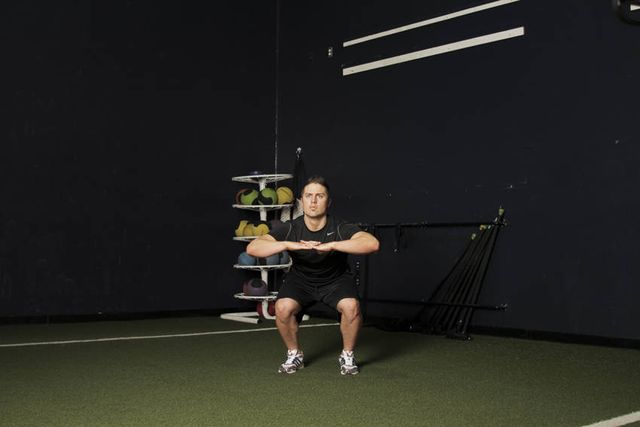
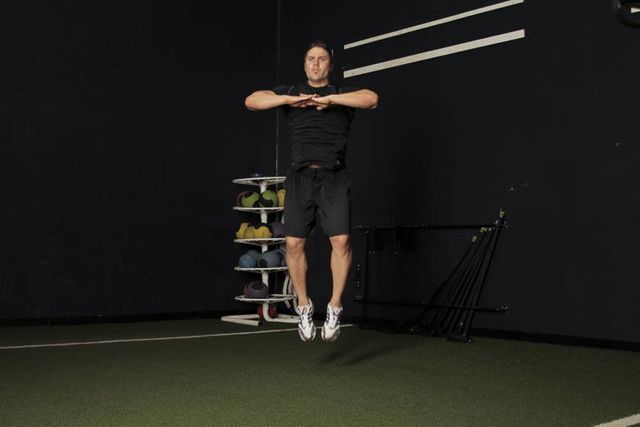
- Main muscles
- Hamstrings
- Also works
- Glutes, Quads and Calves
- Equipment
- Bodyweight
- Level
- Beginner
- Type
- Compound
- Movement
- Push
How to do the Knee Tuck Jump
- Begin in a comfortable standing position with your knees slightly bent. Hold your hands in front of you, palms down with your fingertips together at chest height. This will be your starting position.
- Rapidly dip down into a quarter squat and immediately explode upward. Drive the knees towards the chest, attempting to touch them to the palms of the hands.
- Jump as high as you can, raising your knees up, and then ensure a good land be re-extending your legs, absorbing impact through be allowing the knees to rebend.
Sets and reps
| Conditioning | 3–5 rounds of 20–40 seconds, rest as long as the work |
|---|---|
| Power | 3–5 sets of 3–5 fast reps, full rest |
Log every set in MyoStats and it works out your estimated one-rep max and suggests the next weight or rep target, so you keep progressing without guessing.
Alternatives to the Knee Tuck Jump
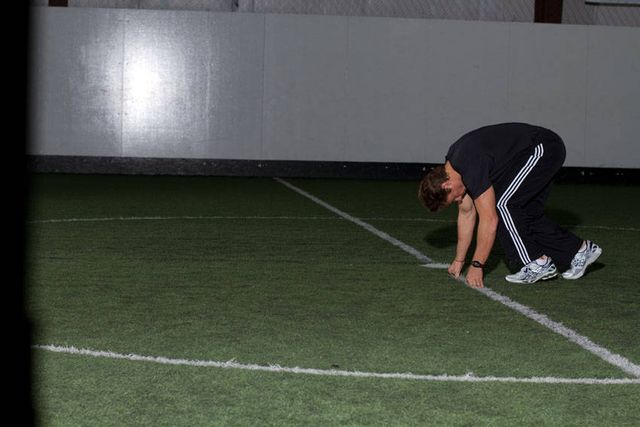 Linear 3-Part Start TechniqueBodyweight · Beginner
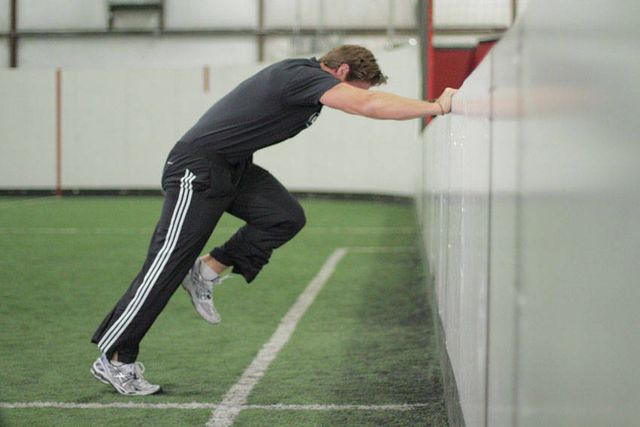 Linear Acceleration Wall DrillBodyweight · Beginner
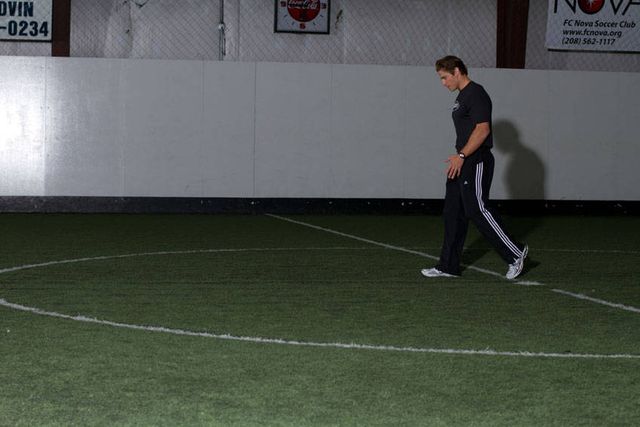 Moving Claw SeriesBodyweight · Beginner
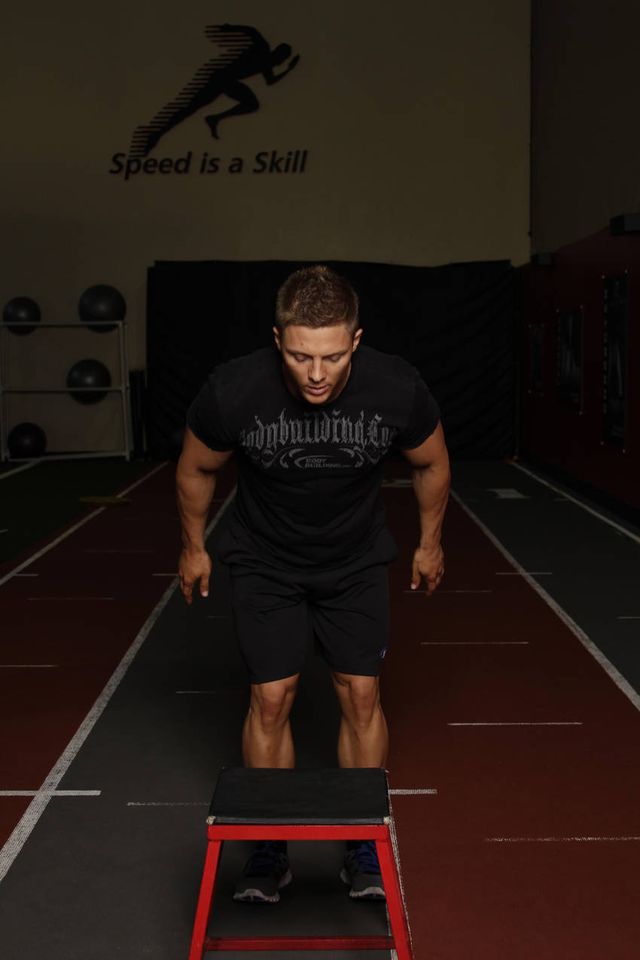 Box Jump (Multiple Response)Other equipment · Beginner
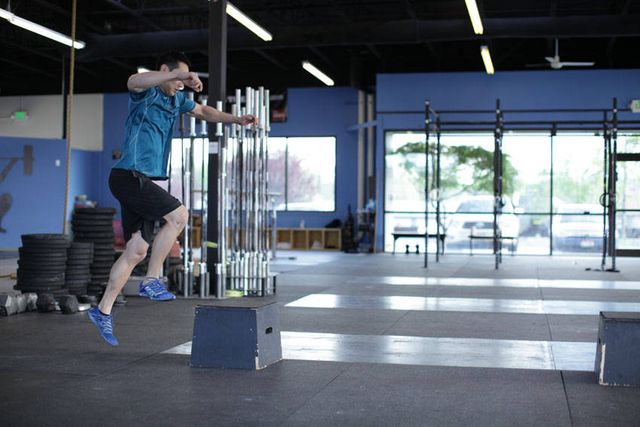 Box SkipOther equipment · Beginner
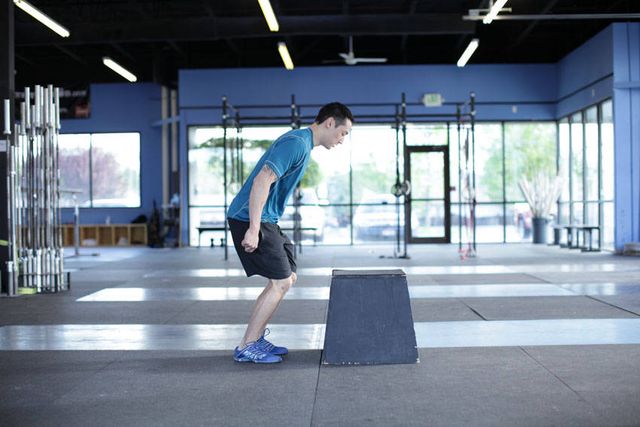 Front Box JumpOther equipment · Beginner
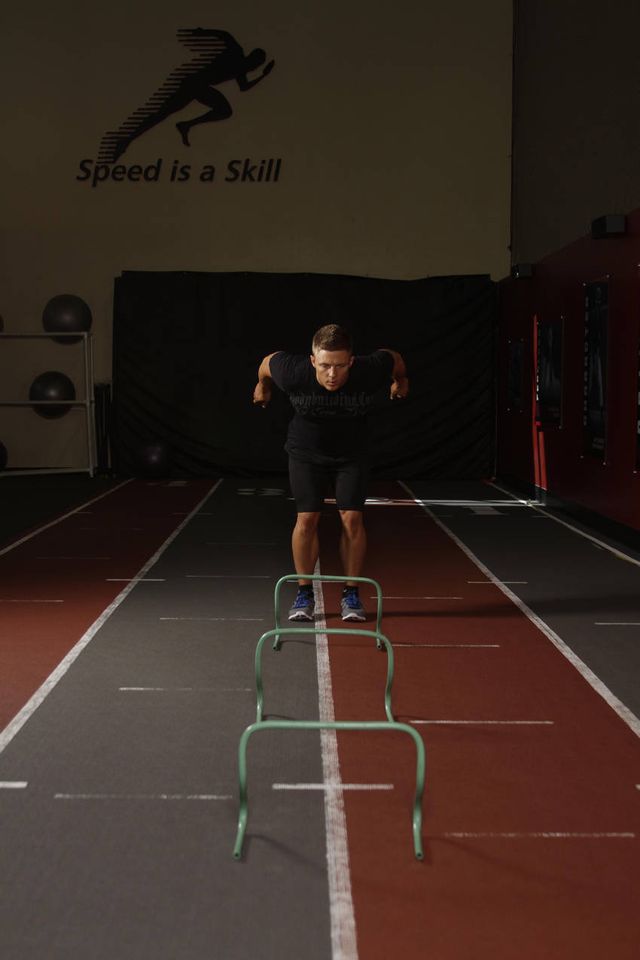 Hurdle HopsOther equipment · Beginner
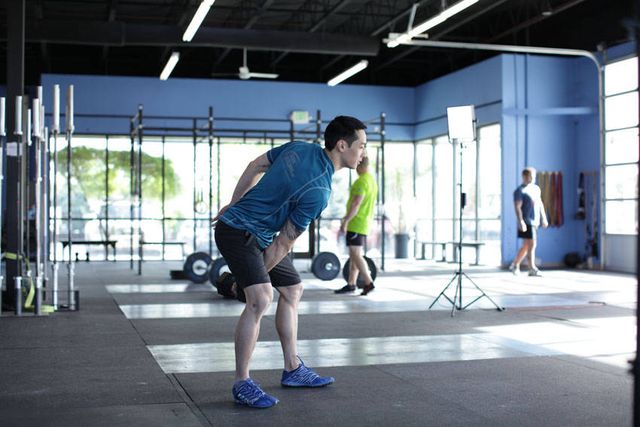 Vertical SwingDumbbell · Beginner
Questions
What muscles does the Knee Tuck Jump work?
Mainly the hamstrings, with the glutes, quads and calves helping.
Is the Knee Tuck Jump good for beginners?
Yes. It's rated a beginner exercise: start light and learn the movement before adding weight.
What can I do instead of the Knee Tuck Jump?
Good alternatives that train the hamstrings: Linear 3-Part Start Technique, Linear Acceleration Wall Drill, Moving Claw Series or Box Jump (Multiple Response).
How many sets and reps of the Knee Tuck Jump should I do?
Conditioning: 3–5 rounds of 20–40 seconds, rest as long as the work. Power: 3–5 sets of 3–5 fast reps, full rest.
Exercise steps and photos: free-exercise-db (public domain).